7 Common Invoice Mistakes Freelancers Make — And How to Fix Them
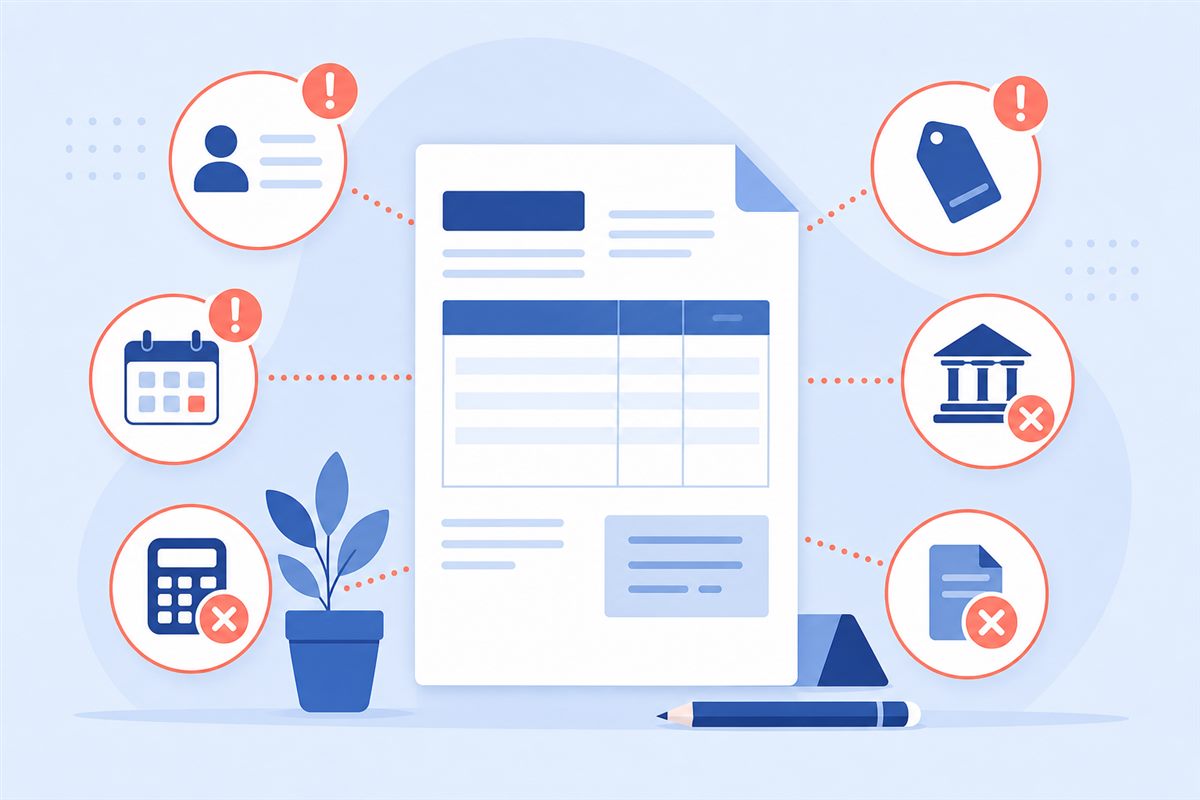
Late payments are frustrating. But a lot of the time, the reason a client hasn't paid isn't because they don't want to — it's because the invoice made it confusing or easy to ignore, including invoice vs receipt confusion.
Here are the 7 most common invoice mistakes freelancers make, and what to do instead.
Mistake 1: No Payment Due Date
Sending an invoice without a due date is like giving someone homework with no deadline — they'll get to it whenever. Always include a specific due date with clear payment terms: "Payment due by May 20, 2026" is much better than just "Net 30."
Mistake 2: Vague Service Descriptions
"Design work — $500" means nothing to a client's accounting team. Be specific: "Social media graphics for April campaign — 10 posts — $500." Clear descriptions equal faster approvals.
Mistake 3: No Invoice Number
Without a unique invoice number, tracking becomes a nightmare for both sides, so set up an invoice numbering system early. If a client's accountant can't reference a specific invoice number, your payment gets stuck in limbo.
Mistake 4: Forgetting Payment Instructions
You'd be surprised how many freelancers send invoices without telling clients how to actually pay. Always include your bank details, PayPal, or whatever method you prefer.
Mistake 5: Sending Too Late
Invoice immediately after work is delivered — not a week later, not at the end of the month. The fresher the work is in your client's mind, the faster they'll approve the payment. Use this guide on how to send invoice properly.
Mistake 6: Not Following Up
If a due date passes and you haven't been paid, send a polite follow-up email within 2-3 days. Most late payments are genuine oversights, not deliberate delays. A quick email fixes most of them.
Mistake 7: Using Unprofessional Templates
A badly formatted invoice with misaligned text and no logo makes you look like an amateur, which is why learning how to create a professional invoice matters — even if your work is excellent. Use a proper invoice generator to make sure your invoices always look clean and professional.
Fix these seven things and your average payment time will drop significantly. Most of them take less than a minute to sort out. For the full checklist, see what an invoice should include. For a complete freelancer workflow, use the invoicing guide for self-employed freelancers. If payment still stalls, follow what to do when a client is not paying your invoice. Pakistani freelancers can also use a free invoice template for freelancers in Pakistan.
Frequently Asked Questions
What are the most common invoice mistakes freelancers make?
Frequent mistakes include missing payment due dates, vague service descriptions, no invoice number, forgotten payment instructions, sending the invoice too late, skipping follow-ups, and using unprofessional templates. Each one can delay approval or make the bill look optional instead of actionable.
Why is a missing due date such a problem?
Without a due date, clients have no clear deadline and payment often slips to "whenever." Adding Net terms and an exact calendar date sets expectations and gives you a concrete date to follow up against. It is one of the simplest fixes with the biggest cash-flow impact.
How specific should line-item descriptions be?
Specific enough that someone in accounts payable can approve the invoice without emailing you. Include project names, deliverables, quantities, or hours as needed. Vague descriptions create clarification loops that delay payment even when the client is happy with your work.
Should every invoice include payment instructions?
Yes. Tell the client exactly how to pay — bank details, payment link, or platform — on the invoice itself. Assuming they "already know" how to pay is a common reason money sits unsent. Clear instructions remove friction at the moment of payment.
How do follow-ups and professional templates help?
Following up consistently keeps unpaid invoices visible, while a clean professional template makes the bill easier to trust and process. Unprofessional or messy layouts can cause clients to question legitimacy or delay internal approval. Fix both habits and payments usually improve.